ABOUT TEMPLE
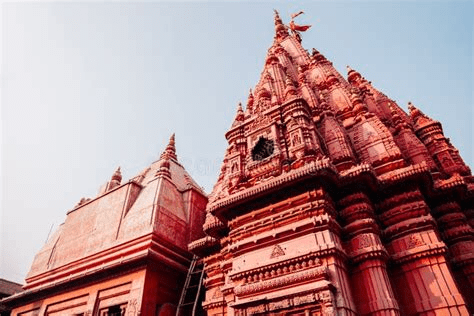
temple history
Durga Kund Temple is one of the most revered and ancient temples of Varanasi.
It is believed to have been originally constructed in the 8th century and later rebuilt in the 18th century by a Bengali queen. The temple is dedicated to Goddess Durga, the divine symbol of power, protection, and victory over evil.
According to popular belief, the idol of Goddess Durga in this temple is self-manifested (Swayambhu) and was not made by human hands. The temple has remained an important center of devotion for centuries and continues to attract devotees from across India.
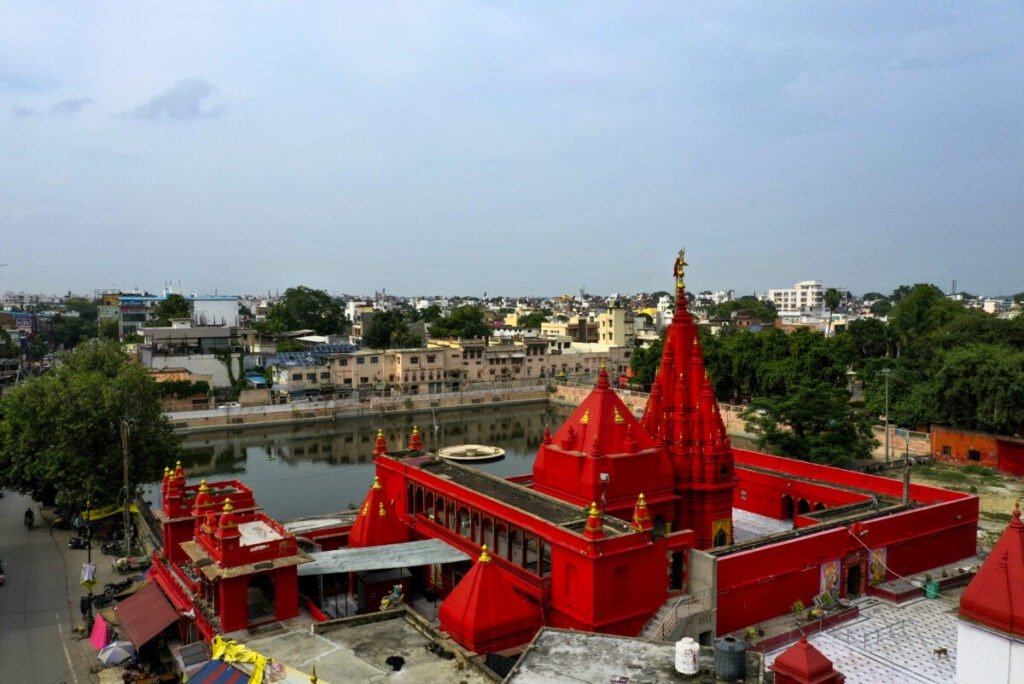
TEMPLE ARCHITECTURE
Durga Kund Temple is built in the North Indian Nagara style of architecture and is easily recognized by its red-colored structure, symbolizing strength and power.
A prominent feature of the temple is the Durga Kund (sacred pond) located beside it, which once remained connected to the river Ganga. The pond enhances the spiritual atmosphere and reflects the temple’s historical significance.
The temple complex also includes shrines dedicated to Lord Hanuman, Lord Shiva, and Goddess Lakshmi, making it a complete spiritual destination for devotees.
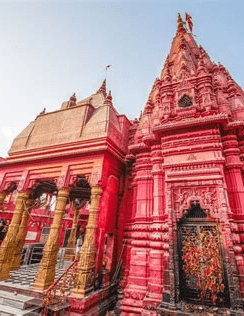
RELIGIOUS & CULTURAL IMPORTANCE
Durga Kund Temple holds immense importance in the religious life of Varanasi.
Thousands of devotees visit the temple daily, especially on Tuesdays, Saturdays, and during Navratri festivals.
The temple is not only a place of worship but also a symbol of India’s rich spiritual heritage, preserving ancient traditions, rituals, and devotional practices.
TEMPLE MANAGEMENT & FACILITIES
The temple is managed by a traditional trust that ensures:
Daily poojas and aartis
Maintenance of temple premises
Crowd management during festivals
Facilities for devotees
The management strives to preserve the sanctity of the temple while welcoming devotees from all backgrounds.
A Place of Faith and Divine Energy
Durga Kund Temple continues to stand as a powerful symbol of devotion, faith, and divine feminine energy, offering peace and spiritual strength to all who visit.